The Silk Road was not a single road. It was a network of trade routes spanning more than 10,000 kilometres, connecting the civilisations of China, India, Central Asia, Persia, Arabia, and the Mediterranean over more than fifteen centuries. And among the most valuable commodities carried along those routes was saffron.
From Herat to the world
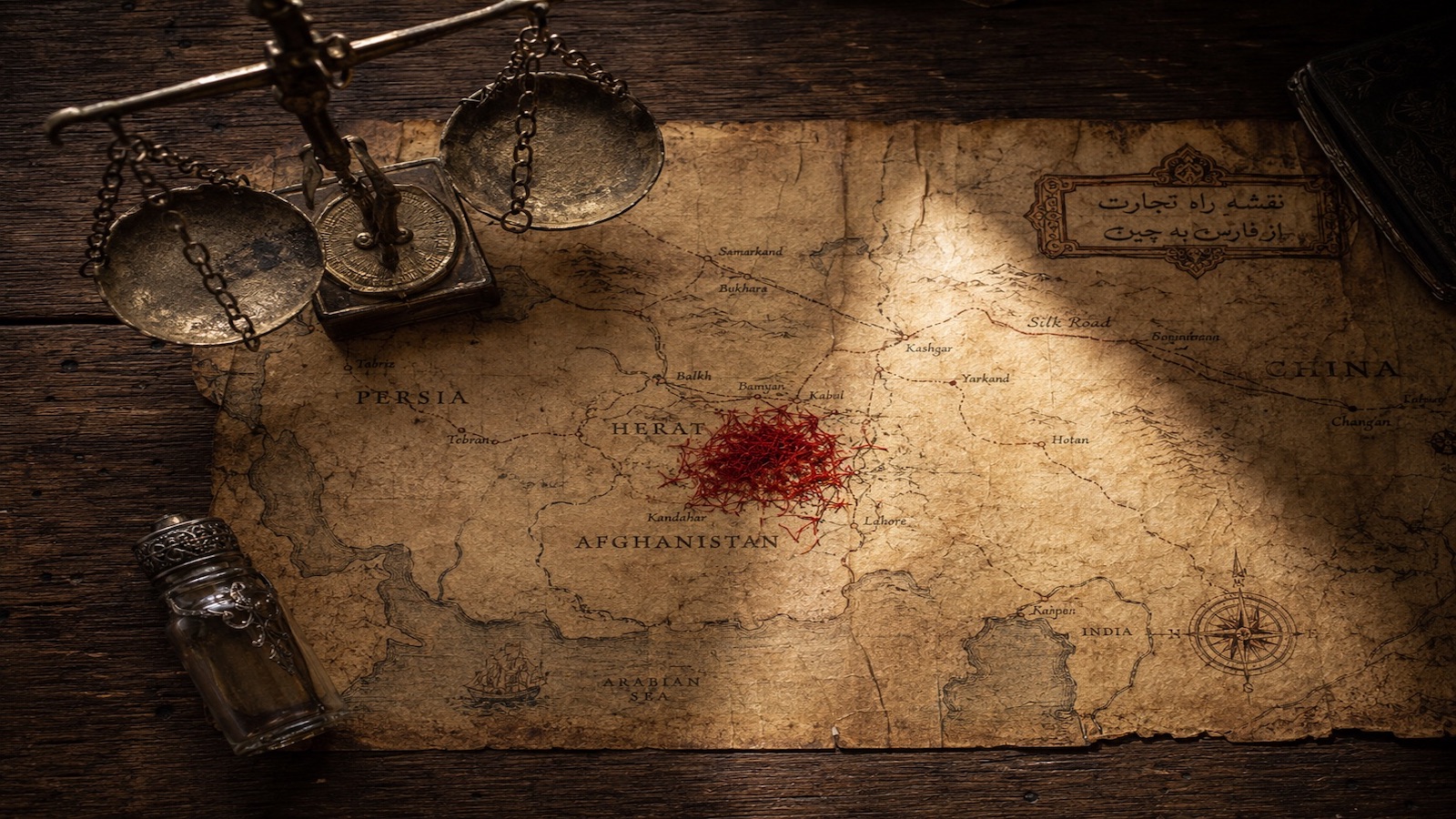
The Herat Valley occupied one of the most strategically important positions in the ancient world — at the junction of routes flowing north to Samarkand and Bukhara, east to Kashgar and ultimately to Chang'an, south to Kandahar and India, and west to Persia and Mesopotamia. Any merchant who wanted to move goods between the great civilisations passed through or near Herat.
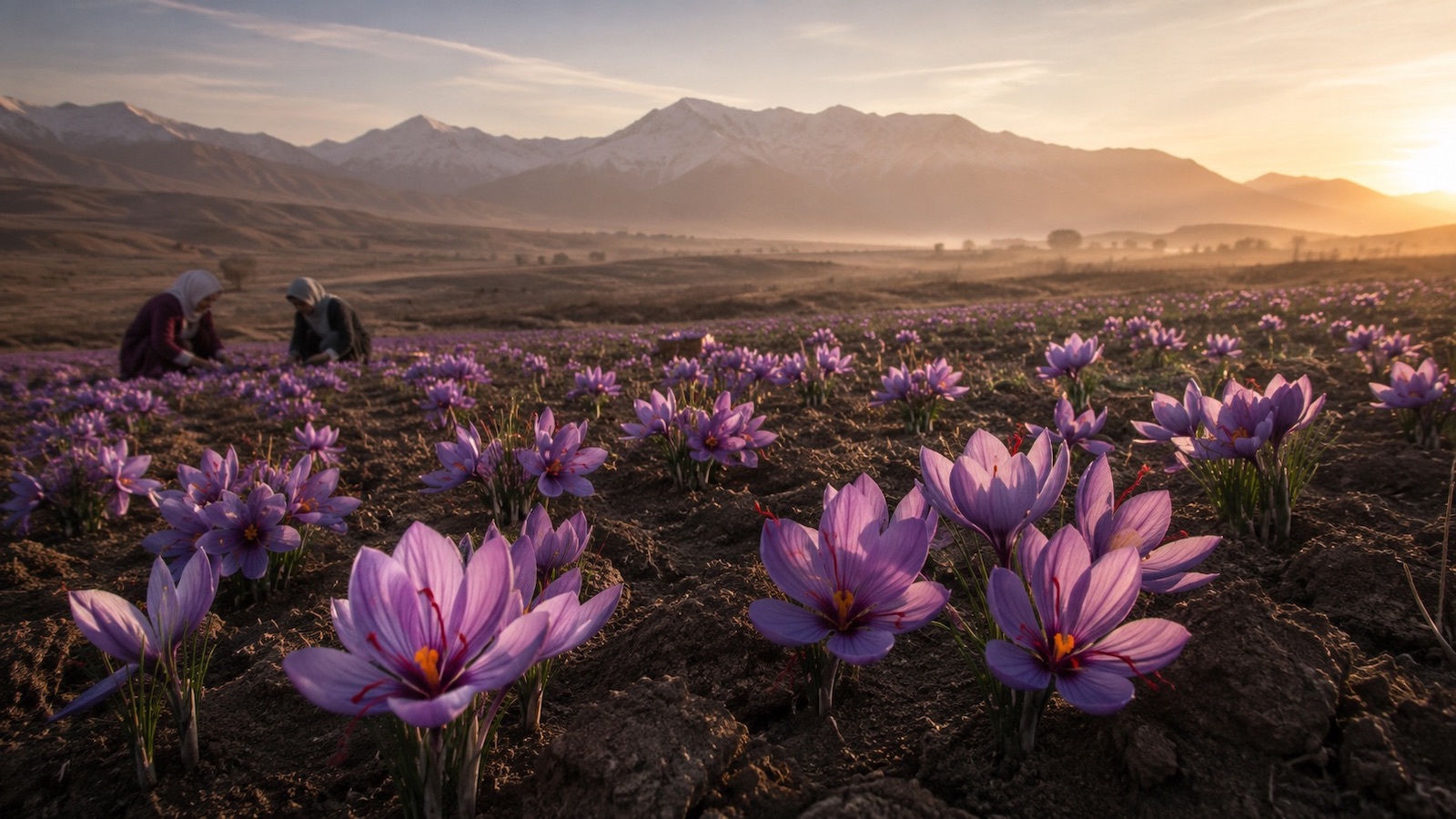
Saffron was a natural export. The climate of the Herat Valley was (and remains) ideal for Crocus sativus. By the first millennium BCE, Afghan saffron was well established as a luxury item traded across the known world. Persian kings used it to dye their robes. Greek physicians prescribed it for melancholy and digestive ailments. Roman emperors scattered it in their bathwater and on the streets during processions.
What the merchants carried
The popular image of the Silk Road is dominated by silk — Chinese silk heading west in exchange for gold, glass, and horses. But silk was never the only commodity. Merchants carried pepper, cinnamon, and cardamom from India; lapis lazuli from the mines of Badakhshan; paper and printing techniques from China; glasswork from Rome and Alexandria; and from Afghanistan's highlands, saffron.
The Silk Road was not simply a trade route. It was the mechanism by which human knowledge, art, religion, and culture spread across Eurasia. Buddhism traveled the Silk Road from India to China. Islam spread along it from Arabia to Southeast Asia. Every commodity carried cultural meaning alongside its material value.
The name we chose
The Persian word for the Silk Road is raah abreshom — literally, the silk road. Abreshom means silk. When we founded Abrexom, we took that word and made it new: not a preservation of the past, but a revival of its spirit — the idea that rare and precious things deserve to travel, to be found, and to be honoured at the table they arrive at.